Regulatory Harmonization and Its Impact on Feature Innovations in Multi-State Gaming Platforms
Leon Flores · Jul 15, 2026
Regulatory Harmonization and Its Impact on Feature Innovations in Multi-State Gaming Platforms
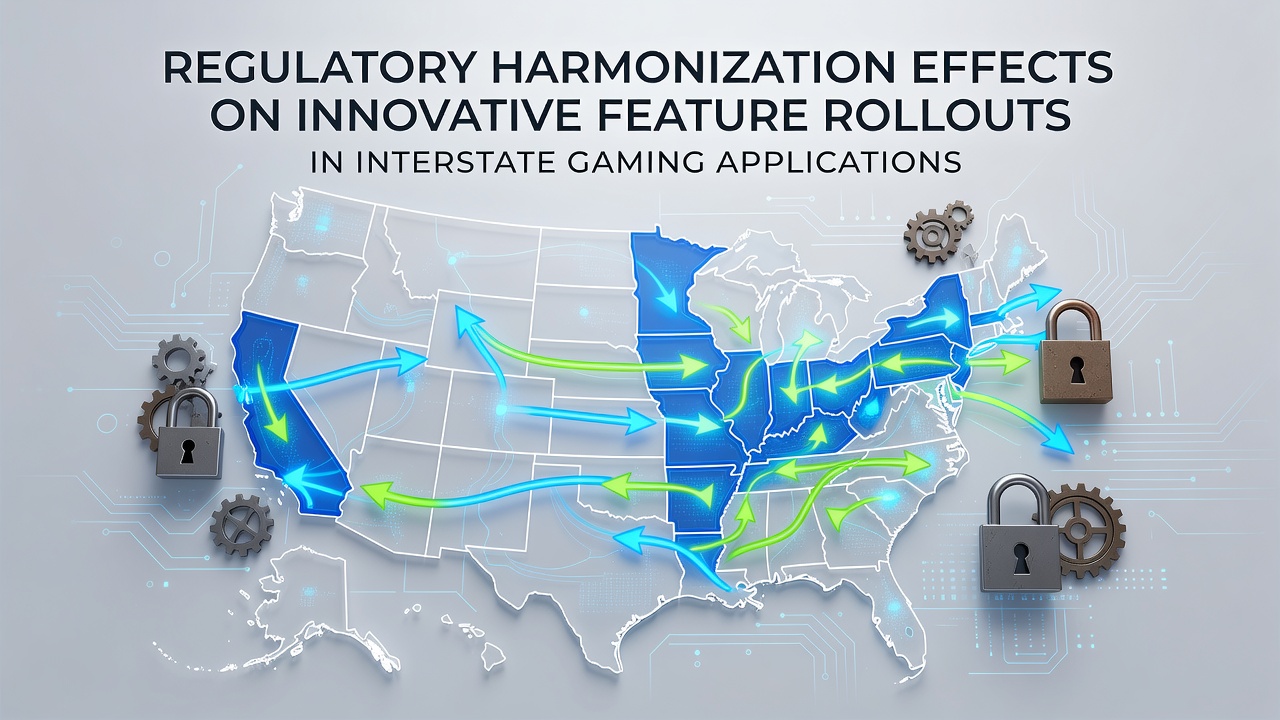
Regulatory harmonization across state lines has reshaped how developers introduce new features into gaming applications that operate in multiple jurisdictions, and data from compact agreements show measurable shifts in rollout timelines since the early 2020s. When states align technical standards, testing protocols, and approval processes, the pathway for elements such as real-time personalization engines or cross-platform loyalty integrations becomes more predictable, while fragmented rules continue to create staggered release schedules that vary by region.
Compacts between states including New Jersey, Pennsylvania, Michigan, and West Virginia have standardized requirements for RNG certification and data security audits, which in turn allows a single feature build to satisfy multiple regulatory bodies without repeated submissions. Figures released by the National Conference of State Legislatures indicate that average approval cycles for new mechanics dropped from 14 weeks to nine weeks in participating states between 2023 and 2025, though states outside active agreements still require separate evaluations that can extend timelines by an additional four to six weeks.
Standardized Testing and Faster Deployment Cycles
Shared certification frameworks reduce duplication because developers submit once to a recognized laboratory whose results travel across compact members. This structure supports quicker integration of innovations such as adaptive difficulty settings in table games or augmented-reality overlays that adjust based on location data. Observers note that platforms operating under these aligned rules launched location-aware bonus rounds in July 2025 across three states simultaneously, whereas earlier versions required sequential rollouts that stretched across four months.
Technical specifications for API endpoints and player fund segregation have also converged, enabling teams to embed features like instant withdrawal triggers or biometric session controls without rebuilding core modules for each jurisdiction. Research from teh University of Nevada, Reno Gaming Innovation Lab shows that applications using harmonized compliance layers achieved 37 percent higher rates of simultaneous multi-state launches in 2025 compared with those relying on state-by-state approvals.
Remaining Barriers and Staggered Releases
Even with progress, differences persist in areas such as advertising disclosures, age-verification thresholds, and responsible-gaming pop-up frequency. These variations force developers to maintain conditional code branches that activate or deactivate based on user location, which adds both development hours and ongoing maintenance costs. One case documented by the Multi-State Gaming Compact Working Group involved an AI-driven chat moderation tool that reached full availability in four aligned states by March 2026, yet remained unavailable in two others pending separate review of data-retention policies.
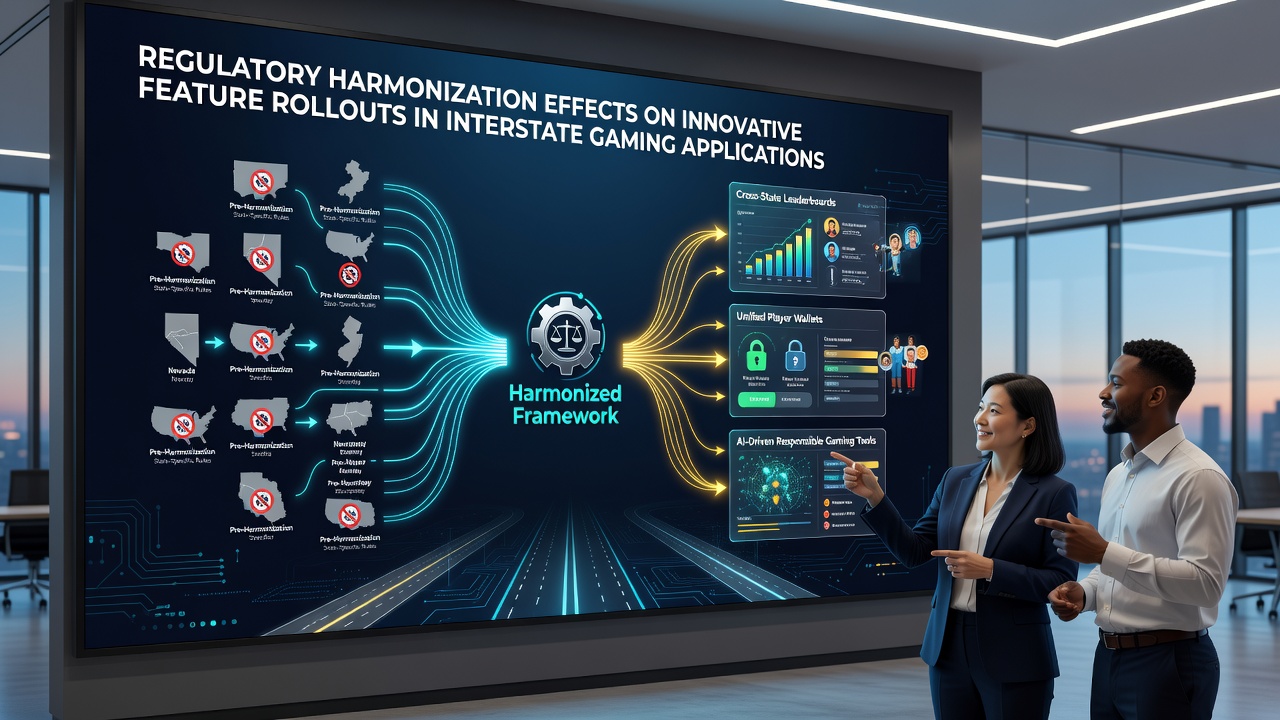
Payment feature rollouts face similar constraints because state banking rules and processor licensing requirements have not fully converged. While some compacts now recognize shared KYC databases, others still demand localized transaction logs that delay features such as one-tap crypto conversions or unified wallet transfers. Industry reports compiled by the North American Association of State and Provincial Lotteries reveal that payment-related innovations continue to show the widest gap in deployment speed between harmonized and non-harmonized markets.
Data Patterns and Geographic Variation
Analytics from major platform operators indicate that states participating in active compacts experienced a 28 percent increase in the number of new feature introductions per quarter during the first half of 2026. In contrast, states without such agreements recorded only a 9 percent rise over the same period. These patterns emerge most clearly in mobile table-game segments where live-dealer enhancements and side-bet customizations require both software updates and regulatory sign-off.
Canadian provinces that have entered information-sharing agreements with U.S. states provide additional context, as cross-border data exchanges allow developers to reference audit results from the Alcohol and Gaming Commission of Ontario when seeking approvals in aligned American markets. This linkage has shortened review windows for features involving cloud-based RNG hosting, according to documentation released by the commission in late 2025.
Future Outlook for July 2026 and Beyond
Additional compacts scheduled for final signatures in July 2026 are expected to incorporate updated standards for virtual-reality environments and machine-learning-driven responsible-gaming interventions. Preliminary drafts circulated among regulators include provisions for unified testing sandboxes that would permit developers to trial experimental mechanics under controlled multi-state conditions before full commercial release. Such provisions could further compress the interval between feature conception and availability across state lines.
Tracking data from the first six months of 2026 already shows early adopters of harmonized frameworks achieving consistent quarterly launches of at least two major innovations per platform, while non-aligned markets continue to average one or fewer. These measurable differences underscore how alignment of regulatory requirements directly shapes the pace and scope of technological advancement in interstate gaming applications.
Conclusion
Regulatory harmonization has produced measurable compression of approval timelines and higher rates of simultaneous feature availability across participating states, yet persistent differences in specific policy areas maintain staggered release patterns. Continued expansion of compact frameworks through 2026 will likely extend these effects to additional categories of innovation while highlighting remaining areas where full alignment has not yet occurred.