Mapping RNG Certification Timelines Across Multi-State Compacts and Their Effects on Table Game Availability
Leon Carter · Jun 10, 2026
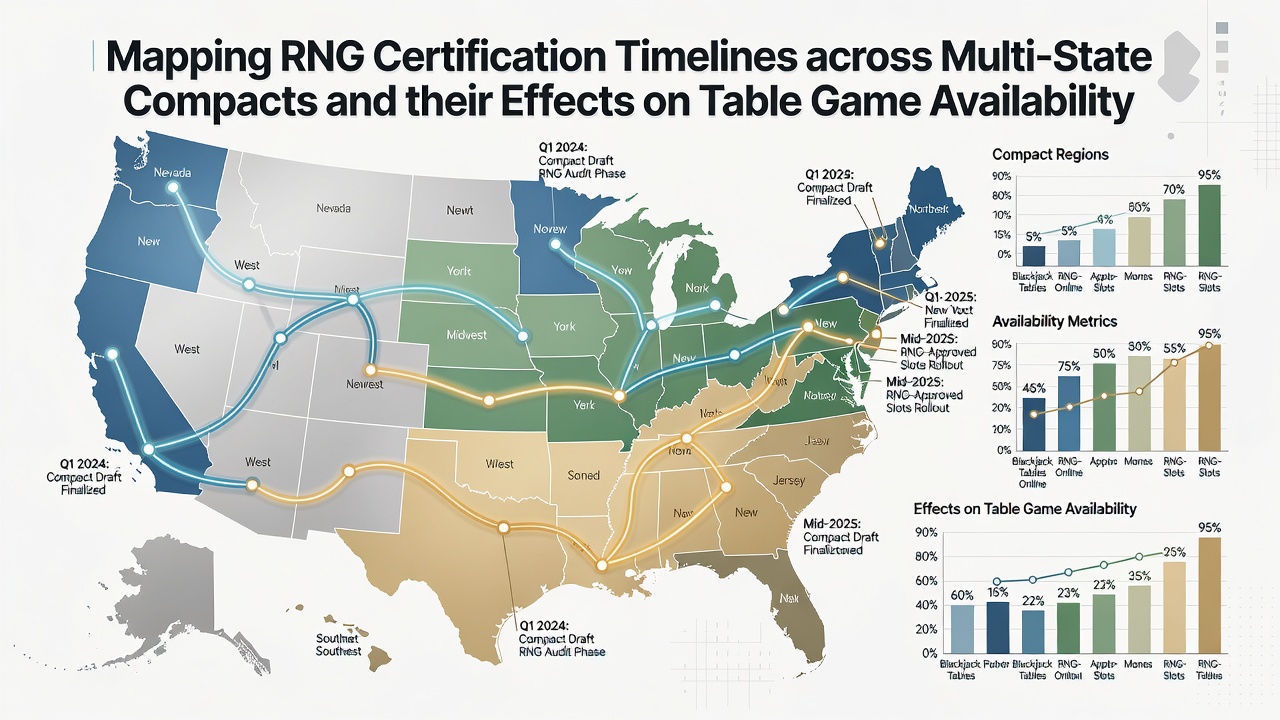
Mapping RNG Certification Timelines Across Multi-State Compacts and Their Effects on Table Game Availability
Multi-state compacts in regulated gambling have created interconnected approval systems where RNG certification for table games must align across jurisdictions before operators can launch products. These agreements coordinate standards between states such as New Jersey, Pennsylvania, and Michigan, requiring sequential reviews that extend from initial submission to final deployment. Data from state regulatory filings shows average certification periods ranging from 90 to 180 days per jurisdiction when no prior compact recognition exists.
Understanding RNG Requirements in Table Game Contexts
Random number generators form the core fairness mechanism for digital versions of blackjack, roulette, and baccarat offered through state-licensed platforms. Each compact defines testing protocols that laboratories must complete, including statistical analysis of output sequences and hardware integrity checks. Researchers at institutions tracking gambling technology note that compact members often accept certifications granted by partner states after a verification period, which shortens the overall timeline once the first approval clears.
Yet compact language still mandates supplemental audits when game variants incorporate live dealer feeds or hybrid mechanics. This step adds 30 to 60 days in most documented cases. Figures released by the New Jersey Division of Gaming Enforcement reveal that 14 table game titles received compact-aligned RNG approvals in 2024, compared with 9 in the preceding year, indicating gradual streamlining as shared templates mature.
Timeline Mapping Across Active Compacts
Compacts between Northeast states typically follow a staggered schedule where the lead jurisdiction conducts primary RNG evaluation, after which secondary states perform abbreviated reviews. A 2025 report compiled by the Multi-State Lottery Association documented that Michigan completes its secondary review phase within 45 days once New Jersey issues clearance, whereas Pennsylvania requires an additional 20 days for compliance documentation. These differences stem from varying statutory language rather than technical discrepancies in RNG standards.
June 2026 Compact Milestones
Scheduled compact amendments set for June 2026 will introduce reciprocal recognition clauses for RNG certificates issued after March 2025. Regulators in participating states have published draft timelines indicating that operators submitting applications by January 2026 could see full multi-state deployment by September of that year, assuming no deficiencies arise during secondary audits. This adjustment targets the backlog that currently delays table game releases by an average of four months across compact boundaries.
Observers tracking these developments point to the Interstate Gambling Compact Commission as the body coordinating these updates, with public comment periods opening in late 2025. Data indicates that states outside existing compacts, such as those in the Midwest exploring new agreements, face certification timelines up to twice as long until they establish mutual recognition protocols.
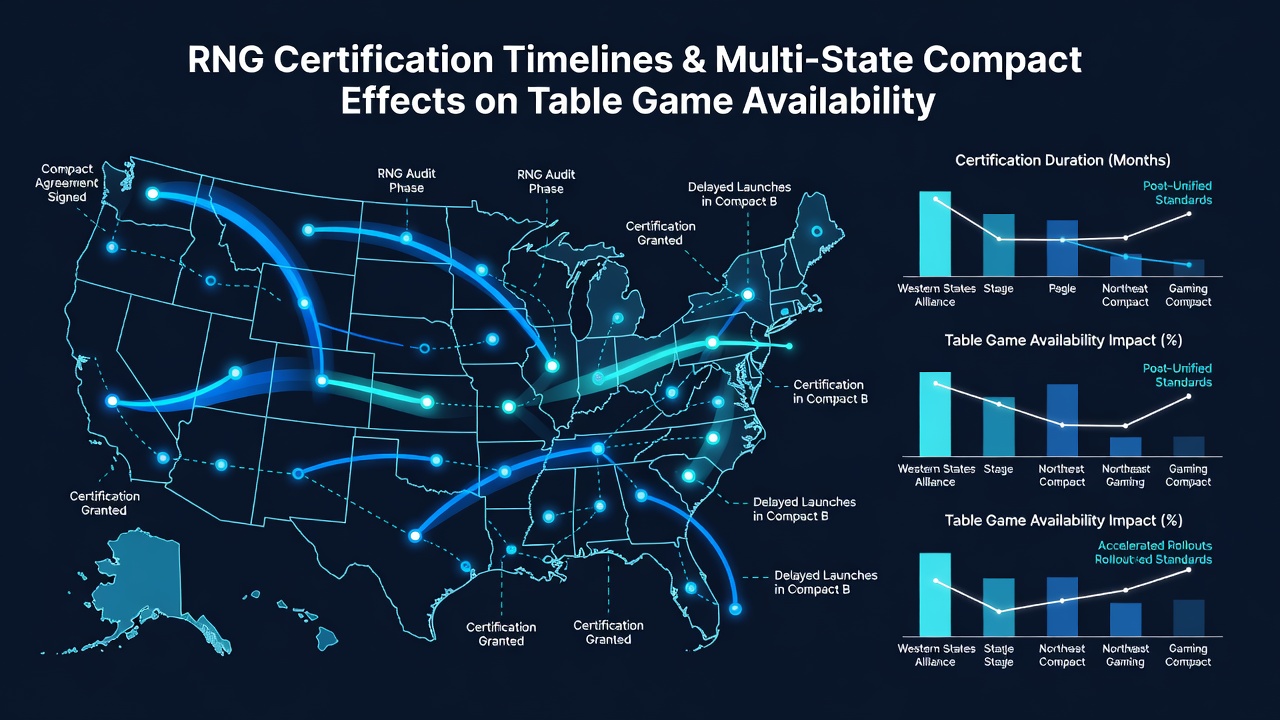
Impact on Table Game Availability for Operators and Players
Extended certification windows directly influence which table game variants reach state-regulated apps and websites. Operators often prioritize titles with pre-approved RNG modules to accelerate market entry, resulting in narrower game libraries in newer compact members during initial rollout phases. A study conducted by the University of Nevada's gaming research center found that platforms operating under single-state approvals offered 22 percent more table game options than those navigating full compact reviews in the same period.
Availability patterns show clear regional clustering. Games certified first in New Jersey frequently appear in Pennsylvania within weeks of secondary clearance, while Michigan listings lag by an additional month in several tracked instances. This sequencing affects player access, particularly for seasonal promotions that rely on specific RNG table game releases. Industry association reports from the American Gaming Association highlight that compact coordination has increased the total number of approved digital table games by 18 percent between 2023 and 2025, even as individual state timelines remain extended.
Comparative Analysis with Non-Compact Jurisdictions
States operating outside multi-state frameworks maintain independent RNG certification paths that can conclude in 60 days but lack portability. Australian regulatory models, administered through state bodies like the Northern Territory Racing Commission, demonstrate faster single-jurisdiction approvals yet require separate evaluations for any cross-border expansion. European examples, including oversight from the Malta Gaming Authority, similarly prioritize rapid initial certification followed by mutual recognition agreements that mirror emerging U.S. compact structures.
Those patterns suggest that as additional American states join existing compacts, the cumulative effect on table game availability will likely accelerate once initial alignment costs are absorbed. Current projections from compact administrative filings estimate that by late 2027, 80 percent of RNG table game submissions will qualify for streamlined multi-state processing under updated June 2026 provisions.
Conclusion
Mapping RNG certification timelines reveals a system where multi-state compacts balance standardized fairness requirements against operational delays that shape table game availability. Data from regulatory filings and academic studies shows measurable progress in reciprocal recognition, particularly with amendments scheduled for June 2026. These developments continue to influence which digital table game options operators can deploy across state lines and when players gain access to them.