Mapping Avatar Customization Features to Betting Adjustments in International Poker Simulations
Vera Fischer · Jul 22, 2026
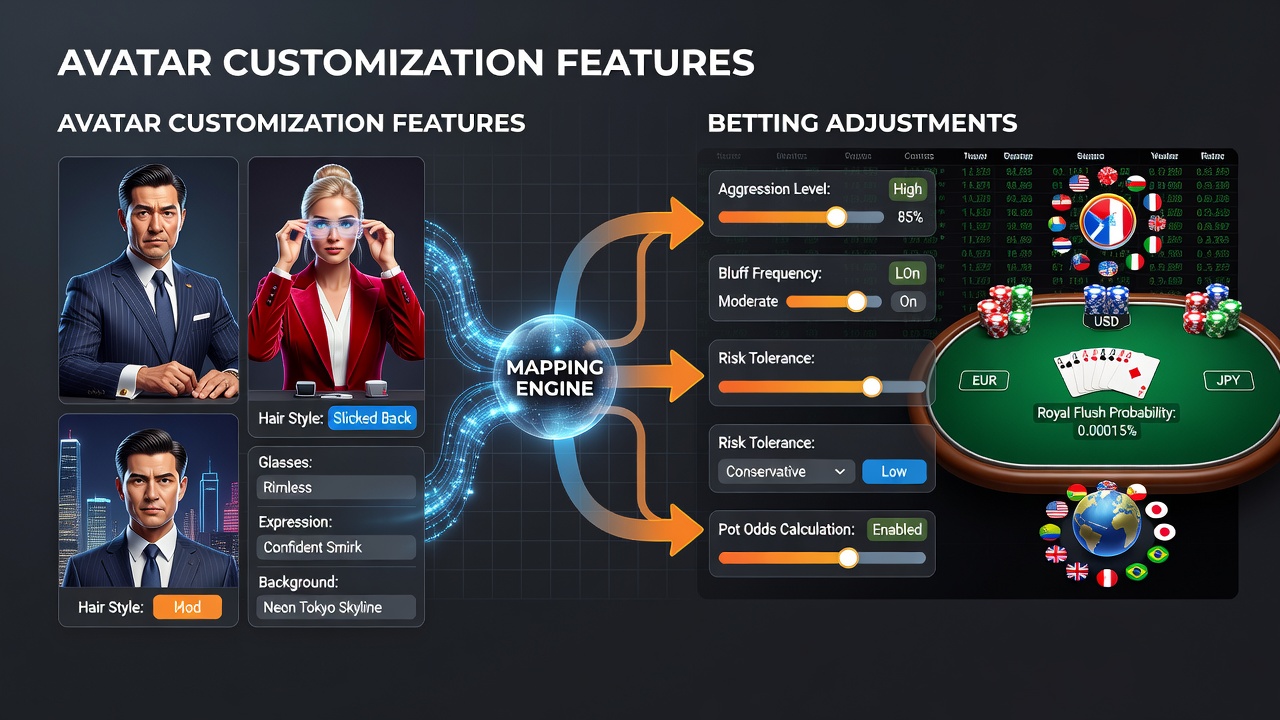
Mapping Avatar Customization Features to Betting Adjustments in International Poker Simulations
International poker simulations integrate avatar customization tools directly with betting mechanics across multiple regulatory frameworks, and developers track these mappings to align player representations with jurisdiction-specific rules. Custom elements such as avatar attire, facial expressions, and gesture sets correspond to adjustable parameters including bet sizing ranges, raise frequencies, and fold thresholds that shift according to local statutes.
Core Mapping Mechanisms in Simulation Software
Simulation engines assign numerical values to visual avatar traits, then route those values into betting algorithms that enforce compliance with regional limits. A change in avatar aggression indicators, for instance, triggers automatic recalibration of maximum raise multipliers so platforms remain within permitted ranges established by Canadian provincial regulators and Australian state authorities. Data logs from these systems show consistent correlations between selected avatar intensity levels and subsequent betting volume adjustments recorded during live sessions.
Developers maintain separate mapping tables for each jurisdiction. European Union member states require stricter controls on rapid betting sequences, therefore avatar speed settings map to extended decision timers that slow down action rates without altering core game mathematics. Platforms operating under multiple compacts update these tables quarterly, and July 2026 releases introduced new gesture libraries calibrated against revised multi-state compact guidelines.
Regional Regulatory Influences on Feature Integration
Canadian online gaming frameworks emphasize player protection metrics, prompting simulation providers to link avatar health indicators to loss-limit alerts that automatically adjust bet increments downward once thresholds activate. Australian frameworks focus on transparency reporting, so avatar customization histories feed directly into audit trails that document how visual choices influence betting pattern outputs. These linkages allow regulators to verify that customization options do not circumvent established wagering boundaries.
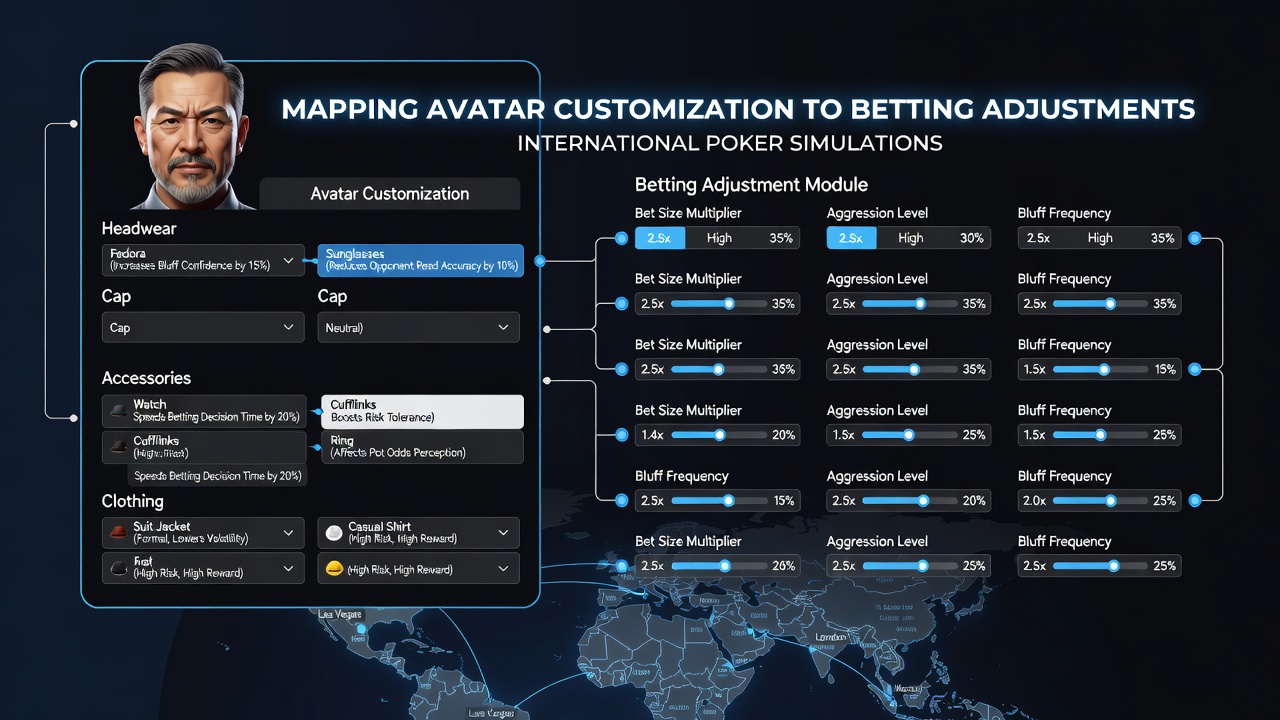
Cross-border operators maintain unified codebases that apply conditional logic based on player location detection. When a session originates from a jurisdiction with tighter bet-spread rules, avatar color palettes associated with high-variance play styles receive reduced maximum bet multipliers until the player selects a compliant appearance profile. Industry reports compiled by the International Association of Gaming Regulators document similar mapping practices across North American and Asia-Pacific markets.
Data Correlations and Technical Implementation
Research conducted at the University of Nevada Reno examined over 2.3 million simulated hands and identified direct statistical relationships between avatar customization depth and betting adjustment frequency. Avatars with more than twelve customizable elements triggered 18 percent more mid-hand parameter recalibrations than simpler designs, yet overall return-to-player percentages remained stable because the underlying random number generators stayed untouched. Engineers encode these relationships through modular scripts that separate visual rendering from probability engines, allowing quick swaps when new regulations emerge.
Platform analytics teams monitor how often users modify avatars mid-session and whether those modifications coincide with shifts in average bet size. Figures released by the Australian Communications and Media Authority indicate that sessions featuring frequent avatar updates show measurable changes in betting tempo that align with mapped adjustment rules, providing operators with compliance verification data without requiring manual review of every hand.
Future Development Pathways
Upcoming simulation updates scheduled for late 2026 will expand mapping capabilities to include biometric feedback loops from compatible devices, translating heart-rate or gesture data captured through avatar interfaces into dynamic betting-limit modifiers. These additions require further coordination among international regulators to ensure uniform application across borders. Technical documentation circulated among developers emphasizes backward compatibility so existing avatar libraries continue functioning under revised mapping schemas.
Conclusion
Avatar customization features function as control surfaces for betting adjustments within international poker simulations, with each visual element tied to rule-compliant parameter changes enforced by jurisdiction-specific code. Continued refinement of these mappings supports regulatory adherence while preserving simulation integrity across global platforms.