Demographic Changes Reshaping Game Preferences Across Legal Online Gambling Platforms
Felix Bennett · Jun 3, 2026

Demographic Changes Reshaping Game Preferences Across Legal Online Gambling Platforms
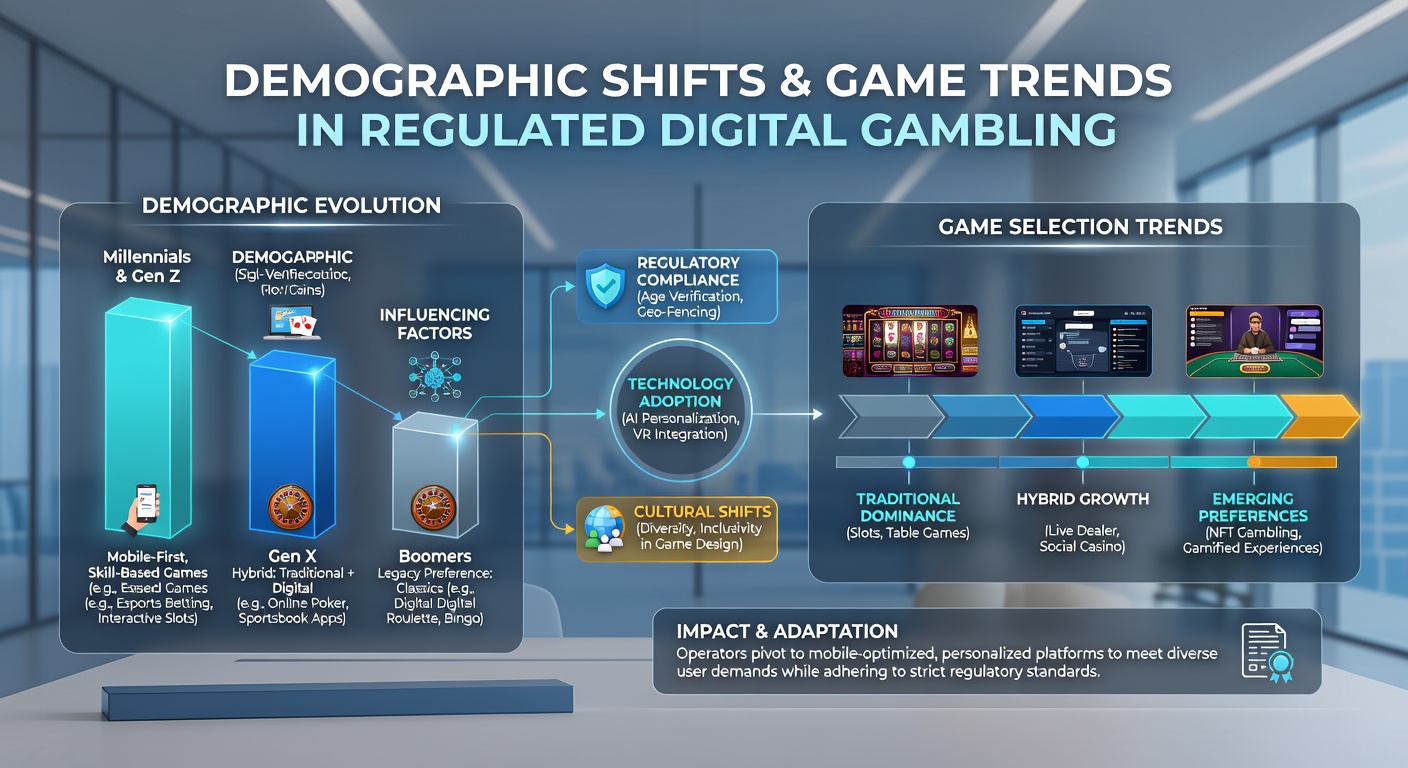
Population trends continue to alter how players approach game selection within regulated digital gambling environments, with data from multiple jurisdictions indicating clear patterns tied to age, location, and income levels. Observers note that younger cohorts gravitate toward interactive formats while established groups maintain preferences for established mechanics, creating measurable differences in platform offerings and session behaviors.
Age-Based Patterns in Game Selection
Players born after 1995 show higher engagement rates with live dealer formats and skill-influenced titles according to participation metrics compiled through 2025, whereas those over 55 demonstrate sustained interest in high-volatility slot options that allow extended play sessions without constant decision points. These divisions appear across markets where age verification systems track entry points and activity logs, revealing consistent separations that operators address through targeted lobbies and promotional structures.
Research from academic centers tracking gambling behavior highlights how mobile interfaces amplify these differences, since younger participants complete more sessions via smartphones while older groups maintain desktop access for certain table game variants. Such distinctions influence product development cycles, with studios releasing accelerated variants designed to fit shorter attention spans common among newer entrants.
Regional and Income Variations
Geographic location further modulates these trends, as urban populations in North American and European markets display elevated selection rates for social casino hybrids compared with rural participants who favor traditional reel-based experiences. Income brackets add another layer, with higher earners showing preference for live multiplayer environments that carry elevated minimum stakes, while mid-range groups concentrate activity in progressive jackpot categories.
Figures released by the New Jersey Division of Gaming Enforcement through early 2026 document these correlations in monthly reports, showing how regulatory data on player location and deposit patterns align with game type distributions. Similar documentation from Canadian provincial authorities illustrates parallel movements, confirming that demographic mapping helps platforms adjust content libraries without disrupting compliance frameworks.
Gender Distribution and Emerging Preferences
Gender composition within player bases has shifted noticeably since 2022, with female participation rising in bingo-style and casual slot categories while male engagement remains concentrated in sports-adjacent and strategy-driven offerings. These patterns emerge from aggregated transaction records across multiple operators, indicating that marketing segmentation and interface customization now reflect these evolving ratios rather than uniform assumptions.
Studies conducted by research institutions such as the University of Nevada Reno Center for Gaming Research have examined how these gender-based selections intersect with payment method choices, noting that certain demographics favor instant withdrawal options tied to specific game verticals. Such intersections become particularly relevant as platforms prepare system updates scheduled for rollout around June 2026.
Platform Adaptations and Data Utilization
Operators respond to these demographic signals by refining recommendation algorithms that prioritize content aligned with verified player profiles. Data from industry associations tracking European markets shows increased deployment of modular game libraries that adapt based on session history and demographic indicators collected during registration. This approach allows regulated environments to maintain variety while directing traffic toward categories that demonstrate higher retention within each segment.
Payment pathway preferences also diverge along demographic lines, with younger users adopting cryptocurrency options at higher rates for certain game types and established players retaining traditional banking methods for slot-focused activity. These patterns appear in transaction flow analyses released by Australian regulatory bodies overseeing digital gambling, providing operators with additional variables for inventory planning.
Conclusion
Demographic factors continue to drive measurable differences in game selection across regulated digital gambling spaces, supported by consistent data collection from government agencies and academic sources worldwide. As platforms incorporate these insights into operational strategies through mid-2026, the resulting adjustments reflect ongoing population dynamics rather than temporary fluctuations. Continued monitoring of age, gender, regional, and income indicators will likely sustain these directional influences on content availability and player engagement patterns.