Analyzing the Effects of International Sports Tournaments on Table Game Preference Shifts Within Licensed Online Platforms
Dana Vogel · Aug 12, 2026
Analyzing the Effects of International Sports Tournaments on Table Game Preference Shifts Within Licensed Online Platforms
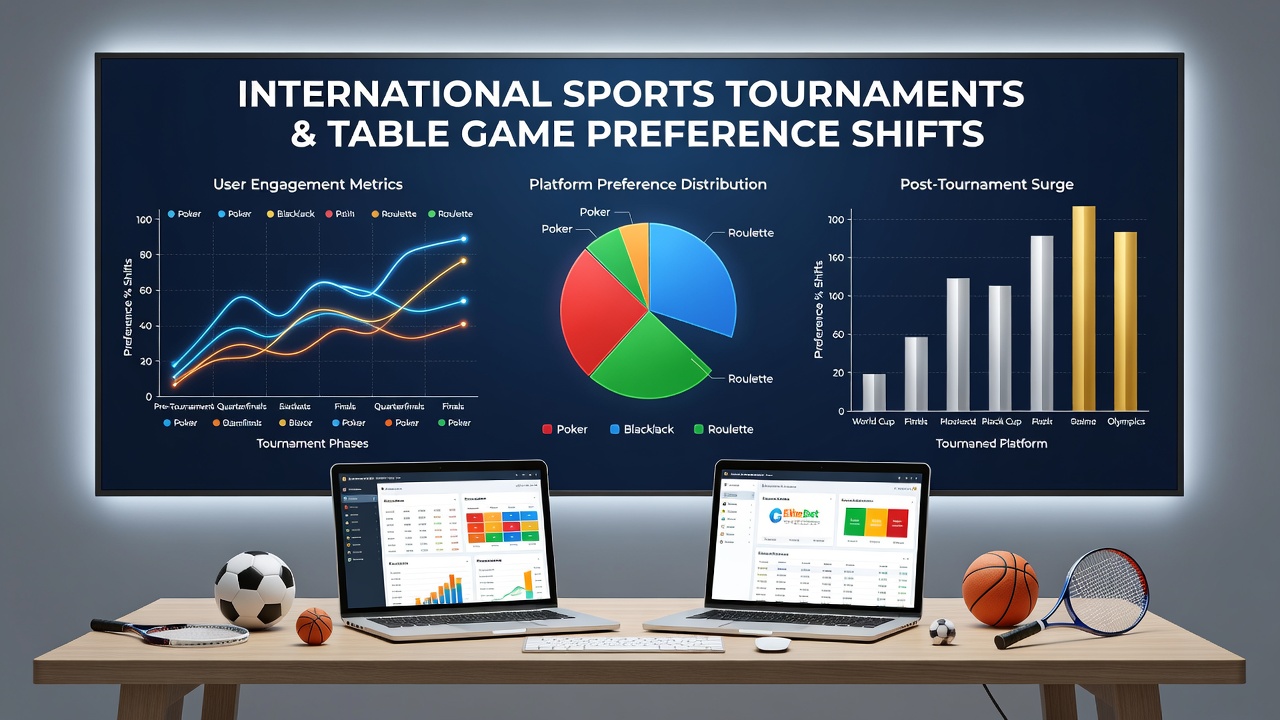
International sports tournaments generate measurable shifts in table game preferences on licensed online platforms, according to platform analytics tracked across multiple jurisdictions. Events such as the FIFA World Cup and the Olympic Games coincide with changes in player selection patterns, particularly in blackjack, roulette, and poker variants, while operators in regulated markets record corresponding adjustments in session durations and wager distributions.
Data collected during the 2022 FIFA World Cup showed increased roulette activity on platforms licensed in New Jersey and Ontario, whereas blackjack sessions declined in relative volume. Researchers tracking these patterns noted that live dealer roulette tables experienced higher concurrent player counts during match broadcasts, a trend that repeated in subsequent tournaments held in 2023 and 2024.
Patterns Observed Across Major Events
Platform operators report that football tournaments produce distinct preference movements compared with tennis or basketball competitions. During periods when multiple matches occur daily, roulette selections rise while poker tables see reduced traffic in the same time zones. One study compiled by the Australian Gambling Research Centre documented a 14 percent increase in European roulette spins on Australian-licensed sites coinciding with the 2023 Rugby World Cup, while Caribbean stud poker participation dropped by 9 percent over the same interval.
August 2026 will mark the start of the FIFA World Cup hosted across North American venues, and regulators in multiple states are already reviewing historical data sets to prepare for anticipated volume changes. Licensed operators in Pennsylvania and Michigan have begun adjusting table game libraries in advance, adding more variants of roulette and baccarat that align with observed preferences from earlier global events.

Regional Regulatory Contexts and Data Sources
Regulated markets maintain different reporting requirements that influence how preference shifts are measured. The Nevada Gaming Control Board publishes quarterly reports that separate table game handle by game type, allowing analysts to correlate spikes with tournament calendars. In contrast, the Alcohol and Gaming Commission of Ontario releases anonymized player behavior summaries that include time-of-day activity, which researchers cross-reference with international match schedules.
European operators licensed under the Malta Gaming Authority contribute aggregated statistics to industry reports produced by the European Gaming and Betting Association. These figures indicate that during the UEFA European Championship cycles, live dealer table games maintain steadier engagement than RNG equivalents, particularly when matches occur in overlapping time zones with major European markets.
Factors Driving Preference Movements
Session length and social features appear to play roles in the observed changes. Roulette tables permit shorter decision cycles that align with viewers checking phones between match highlights, while poker requires longer concentration periods that compete directly with event viewing. Licensed platforms that integrate live sports feeds alongside table games record higher simultaneous usage rates during tournament windows, according to internal metrics shared with academic partners at the University of Nevada, Las Vegas.
Payment and bonus structures also interact with these patterns. Deposit bonuses tied to table game play show different redemption rates during tournament periods, with operators noting increased uptake on games that allow rapid bet placement. These adjustments remain within the boundaries set by state and provincial compacts that govern bonus terms and responsible gaming disclosures.
Conclusion
International sports tournaments continue to correlate with measurable reallocations of player activity across licensed table game offerings. Operators and regulators rely on jurisdiction-specific data streams to monitor these movements, and upcoming events in 2026 will provide additional datasets for analysis. The documented patterns remain consistent across multiple reporting cycles, offering a factual basis for understanding how global competitions intersect with digital table game engagement on regulated platforms.